Polyethylene terephthalate (PET) and its copolymeric variants represent a critical class of thermoplastic polymers widely
deployed in packaging, industrial textiles, and consumer products due to their tensile strength, dimensional stability, and
chemical resistance. PET materials are broadly categorized into virgin polyester (vPET), derived directly from
petrochemical feedstocks, and recycled polyester (rPET), produced via the mechanical or chemical reprocessing of post
consumer polymer waste. While functional performance across both forms remains comparable, structural differences in
chain morphology, thermal degradation history, and comonomer distribution persist. In this study, gas chromatographic
(GC) profiling following depolymerization, extraction, and derivatization was evaluated as a qualitative and quantitative
diagnostic methodology to differentiate vPET and rPET matrices based on residual monomeric markers. Method validation
according to IS 16481-2016 demonstrated successful detection of isophthalic acid (IPA) across five commercial food
contact plastic substrates. Chromatographic comparison revealed distinct profile signatures, wherein rPET exhibited a
secondary retention peak (tR =8.565 min) attributable to residual monomeric IPA, whereas vPET displayed a singular
internal standard peak (tR =6.386 min). These findings demonstrate the viability of chromatographic profiling for
verification, quality assurance, and traceability of recycled polymer fractions within commercial supply chains. The article
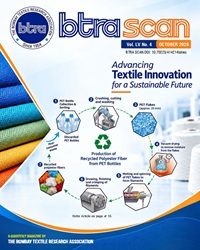
aims to improve awareness of the origin and applications of polyester fibres and to highlight how recycling existing
polyester waste can contribute to resource conservation and waste reduction